ABB LWN1902-6E 3BHL000986P7001
| Brand | ABB |
| Module Number | LWN1902-6E |
| Order Number | 3BHL000986P7001 |
| Unit price | $1999 |
| Country Of Origin | Switzerland and Sweden |
| Weight | 2.5KG |
| Certificate |
C/O from the Chamber of Commerce C/Q from the Manufacturer |
| Warranty | 12 Months |
| Inventory Qty | 3 |
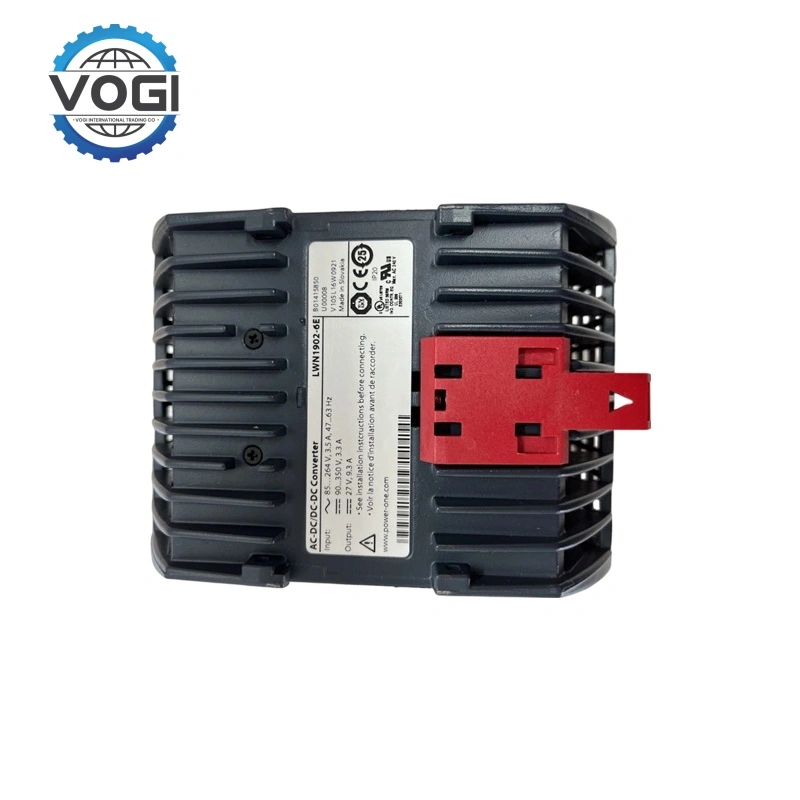
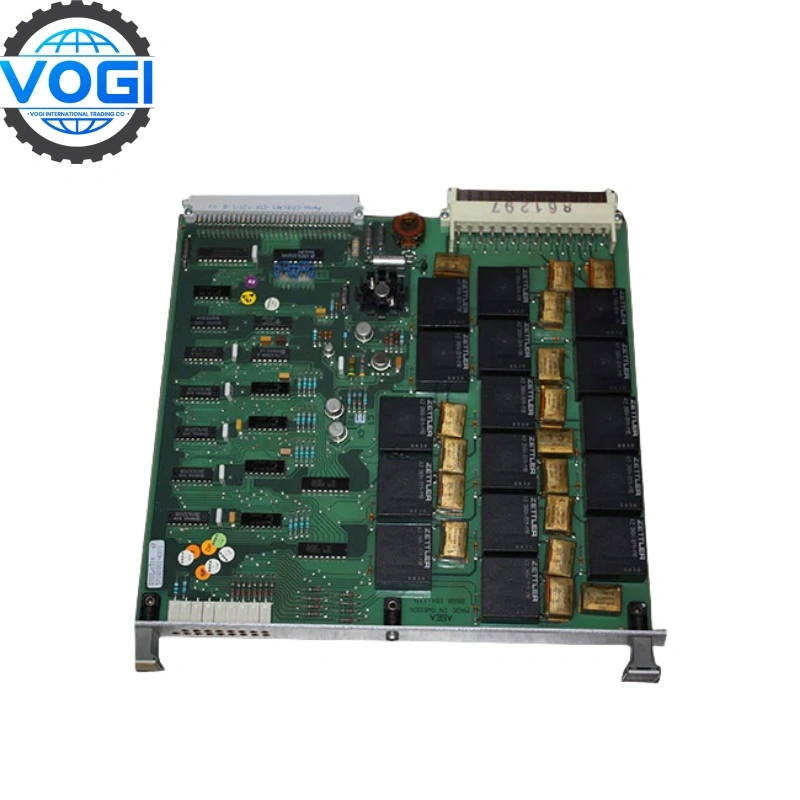
ABB LWN1902-6E 3BHL000986P7001 is Control and Auxiliary Power Module. It is responsible for providing a stable and isolated low-voltage DC power supply for the control system, drive board, sensors and communication circuits, and participates in the system’s power-on sequence, fault interlocking and status monitoring.
LWN1902-6E 3BHL000986P7001 Power Module Working Principle
An EMI filter at the front end suppresses mains interference and protects the internal circuitry.
The input AC power is rectified by a full-bridge rectifier and filtered by a large-capacity electrolytic capacitor to generate a high-voltage DC bus (approximately 540V DC).
High-frequency DC-to-DC conversion is achieved by using a PWM high-frequency switching topology to chop the high-voltage DC into high-frequency AC pulses. These high-frequency pulses then pass through a high-frequency isolation transformer to achieve electrical isolation between high-voltage and low-voltage circuits (withstand voltage ≥4kV), ensuring safety.
The built-in transformer's secondary multi-winding output undergoes fast diode rectification and LC filtering to generate multiple independent DC power supplies, resulting in three different DC power configurations:
+24V DC: Main control power (supplying CPU, I/O, relays, and communication)
±15V DC: Analog signals, sensors, and drive circuit power
+5V DC: Digital circuits and FPGA/DSP core power supply.
Each output features closed-loop timely feedback regulation (optocoupler-isolated feedback) to ensure voltage accuracy ≤±1%.
Built-in overvoltage, overcurrent, short-circuit, and overheat protection ensures rapid shutdown and output protection in case of faults. Finally, a normal/fault dry contact signal is provided to connect to the system's safety circuit.
Account Number 88800006406771
Account name Vogi International Trading Co., Limited
(* If the account name exceeds the available space, please continue in the address field.)
SWITF/BIC Code WIHBHKHHXXX
Bank name OCBC Hong Kong Branch
Bank address 161 Queen's Road Central, Central, Hong Kong
Country/Region Hong Kong (China)
Account type Business Account
Bank code 035
Payment method For the payment of goods, please make a FPS/CHATS/SWIFT Payment
Notes Please include the following memo/message to receiver when making a payment: [Buyer Name] [Invoice/Contract Number] [Product]
System operation procedure steps
The first part introduced the working principle of the 3BHL000986P7001 power module. The following section describes the overall operation and running process of the ACS6000 system:
Auxiliary power supply is powered on, the auxiliary circuit switch is closed, the LWN1902-6E starts, and each group of control voltages is output. The control system (DSP/FPGA), CDP panel, and communication module are initialized.
The system then undergoes a self-test (Pre-charge & Self-test).
After passing the self-test, the control system allows the closure of the medium-voltage incoming circuit breaker (VCB).
Next, it receives speed or torque command signals from the DCS/PLC.
Motor current, voltage, speed encoder, and temperature are acquired. The stator flux linkage and electromagnetic torque are calculated in real time using the DTC algorithm (core control).
During motor deceleration/power generation, energy is fed back to the grid via the inverter → DC bus → ARU active rectifier unit (energy saving).
During normal shutdown, the process is as follows: A shutdown command is received, and the speed/torque command is reduced to 0.
The control system gradually reduces the output frequency and voltage, causing the motor to decelerate smoothly.
Once the speed reaches 0, the IGCT trigger pulse is blocked, and the inverter stops outputting.
The main circuit breaker (VCB) is disconnected after a delay, and the DC bus discharges.
Finally, the auxiliary power supply is disconnected, and the LWN1902-6E stops operating.
In the unfortunate event of a fault, a professional engineer will promptly follow the instructions below:
Upon detection of a fault (overcurrent, overvoltage, undervoltage, overheating, power failure, communication interruption),
immediately block the pulse → disconnect the main circuit → trigger the alarm.
Finally, the fault code will be displayed on the CDP panel for easy troubleshooting and resolution.